
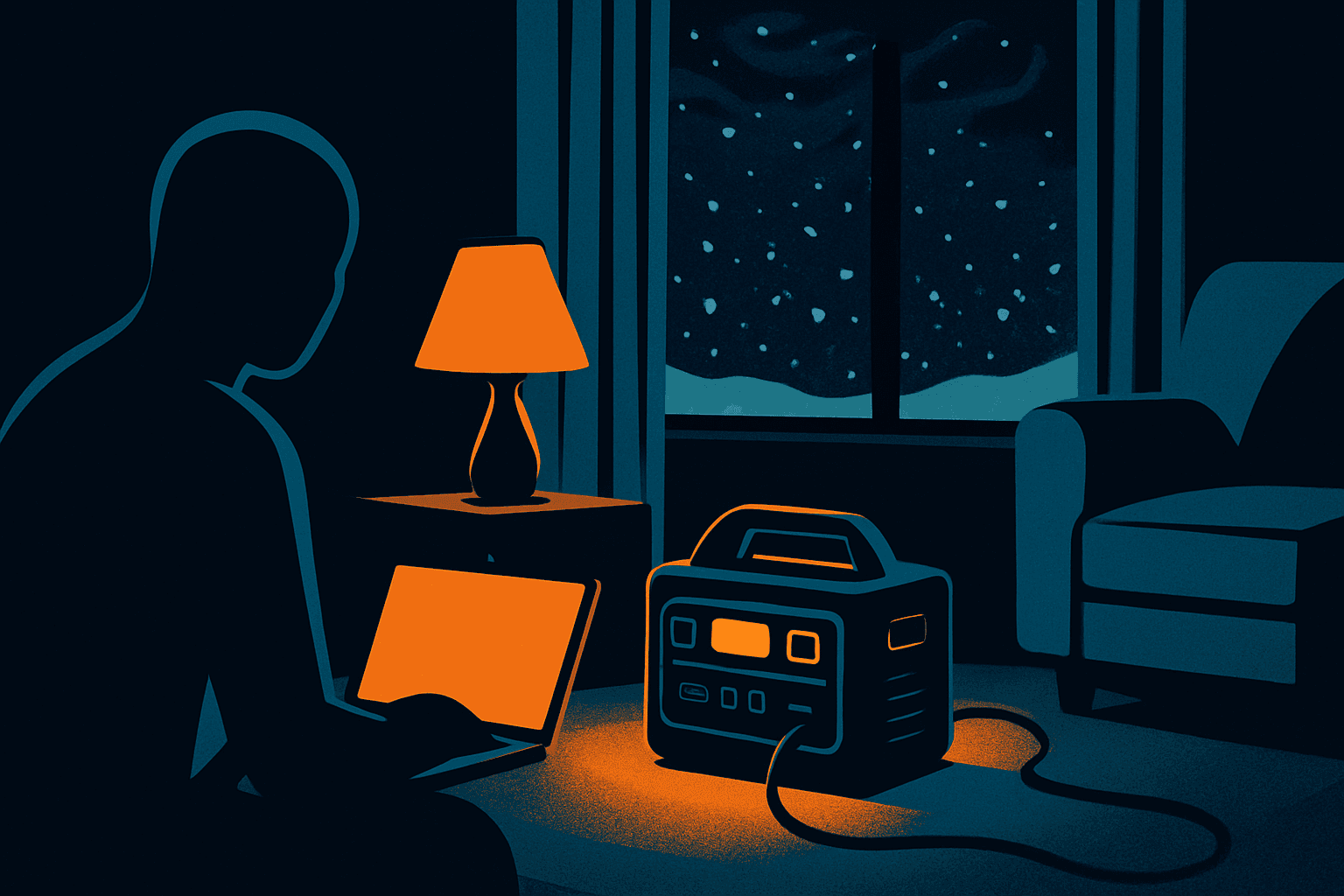
Winter storm season is right around the corner, and nothing tests your gadget setup like a blackout. A portable power station is a big rechargeable battery with standard outlets, USB-C ports, and often solar input. It keeps your phone, router, laptop, and lights alive when the grid goes down. Here's what to look for in 2026, plus five well-reviewed picks and tips for catching a real deal.
What to Look for in a Portable Power Station
- Capacity (Wh): Watt-hours tell you how much energy is stored. Around 250-300Wh covers phones, a router, and lights for a day. 1,000Wh+ can run a fridge for several hours or a home office setup.
- Output (W): Check that the continuous wattage exceeds the combined draw of what you plan to plug in.
- Battery chemistry: LiFePO4 (LFP) batteries last far more charge cycles and are safer than older lithium-ion designs.
- Recharge options: Wall, car, and solar input give you flexibility. Fast wall charging matters if power flickers back on briefly.
- Ports: Look for USB-C Power Delivery (60W or higher) so you can charge laptops without a bulky adapter.
- Safe use: Never run a power station or generator indoors if it has a combustion engine. Battery units are safe indoors, but keep them ventilated and away from heat.
5 Well-Reviewed Picks
1. Jackery Explorer 1000 v2: Best All-Rounder
A popular mid-size option with LFP battery chemistry, fast recharging, and enough output for a laptop, router, and small appliances. Check the latest price on Amazon.
2. EcoFlow River 3 Plus: Best Compact Pick
Small enough to stash in a closet, with quick charging and plenty of ports for phones, tablets, and a Wi-Fi setup. See it on Amazon.
3. Anker SOLIX C1000: Best for Fast Charging
Anker's ultra-fast recharge is a big win when you only have a short window of grid power. Find it on Amazon.
4. Bluetti Elite 100 V2: Best for Home Backup Basics
A sturdy, LFP-based unit suited to keeping essentials like internet gear and lights on for hours. Browse on Amazon.
5. Goal Zero Yeti 500: Best Established Brand
A long-running favorite with a reputation for solid support and accessories, handy for small loads and camping. View on Amazon.
How to Catch a Real Deal
- Compare price per Wh: It's the easiest way to compare models of different sizes.
- Check price history: Power stations are frequently discounted, so a "sale" may just be the usual price.
- Bundle wisely: Solar panel bundles are often cheaper than buying separately, but only if you'll actually use the panels.
- Verify the warranty: Look for at least two to five years, especially on LFP models.
Our Take
Most people don't need a giant unit. Start by adding up the watts of your must-keep-on devices, choose a model with roughly 30% headroom, and charge it to full before storm season hits. Prices and availability change often, so verify details on the product page before you buy.
Discussion
Discussion (0)
No comments yet. Be the first to start the discussion!
Comments are now closed for this article.